

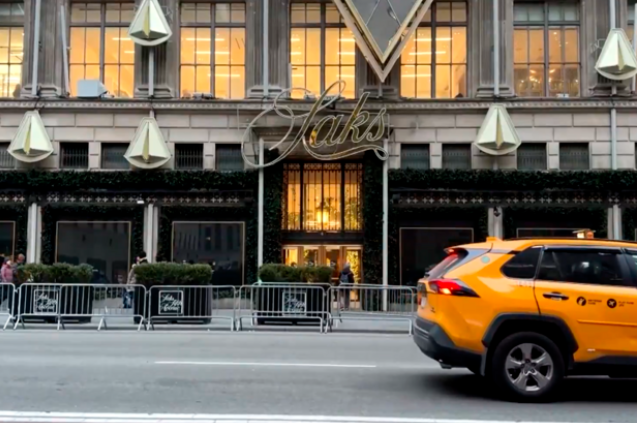
NEW YORK CITY, New York: After years of expansion fueled by debt and rising pressure from cautious luxury shoppers, Saks Global has sought bankruptcy protection as it moves to overhaul its business and balance sheet.
The New York-based private company, which owns Saks Fifth Avenue and Neiman Marcus, said on January 14 that it had filed for Chapter 11 bankruptcy in the Southern District of Texas. The filing comes as the retailer prepares to reposition itself in an increasingly competitive upscale market, backed by about US$1.75 billion in financing commitments.
Leadership changes have accompanied the restructuring effort. Chief executive Marc Metrick stepped down earlier this month as the company grappled with debt linked to its $2.65 billion acquisition of Neiman Marcus in 2024. He was succeeded by executive chairman Richard Baker, who quit both roles earlier this week and was replaced as chief executive by Geoffroy van Raemdonck.
The company is also facing intensifying competition while working to reduce its heavy debt load, even as some customers push back against steep price increases in the luxury sector.
In a statement, the company said it was “evaluating its operational footprint to invest resources where it has the greatest long-term potential.”
Saks said it does not expect operations to be disrupted during the bankruptcy process and will continue to honor customer programs while paying suppliers and employees.
The retailer said it has secured financing commitments totaling $1.5 billion from some of its creditors, along with an additional $240 million in “incremental liquidity” from its lenders.
Hudson’s Bay Co., the Canadian owner of Saks Fifth Avenue, split off the luxury retailer’s e-commerce business, Saks.com, in 2021. Three years later, after acquiring Neiman Marcus, Saks Fifth Avenue changed its name to Saks Global.
The restructuring unfolds against a weakening global luxury backdrop. Worldwide sales of luxury goods are expected to contract for a second consecutive year in 2026 as consumers worry that the global economy will curb spending, according to a study released in November by Bain & Co.
Hudson’s Bay, Canada’s oldest company, moved in March 2025 to begin liquidating all but six of its stores.
