

Introduction
Digital transformation is no longer just a buzzword—it is a necessity for businesses and organizations that want to stay competitive. By 2026, emerging technologies will continue to reshape industries, improve customer experiences, and drive innovation. Digital transformation goes beyond upgrading software or using new tools. It involves rethinking processes, strategies, and interactions to make organizations more agile, efficient, and customer-focused.
From artificial intelligence to blockchain, cloud computing to the Internet of Things, new technologies are changing the way businesses operate. Companies that adopt these trends early will gain a competitive edge, while those that lag may struggle to survive. Understanding these trends is essential for beginners and intermediate users who want to stay relevant in the fast-paced digital landscape. This article will explore the top digital transformation technology trends expected in 2026, their importance, and how to leverage them effectively.
What is Emerging Digital Transformation Technology?
Emerging digital transformation technology refers to the latest advancements that change how organizations function. These technologies help businesses automate processes, make data-driven decisions, enhance customer interactions, and improve operational efficiency. Digital transformation technologies include artificial intelligence, machine learning, cloud computing, blockchain, IoT devices, augmented and virtual reality, edge computing, and advanced cybersecurity solutions.
These technologies often work in combination. For example, IoT devices generate data that AI can analyze, while cloud platforms store and share the information for further decision-making. By integrating these technologies, organizations can operate more efficiently, provide personalized customer experiences, and explore new business models. In 2026, these technologies are expected to evolve even further, enabling faster innovation and smarter business strategies.
Why is Digital Transformation Important?
Digital transformation is vital for any organization looking to succeed in 2026. Businesses that adopt emerging technologies can operate more efficiently, respond quickly to market changes, and offer superior services to customers. Automation and AI reduce repetitive work, allowing employees to focus on strategic tasks. Advanced analytics provide actionable insights, helping businesses make better decisions. Digital transformation also enhances customer experiences by offering personalized and faster services, which leads to increased satisfaction and loyalty.
Organizations that embrace digital transformation can innovate more easily, launch new products faster, and create business models that are more adaptive and sustainable. On the other hand, companies that resist adopting new technologies risk falling behind competitors and losing market share.
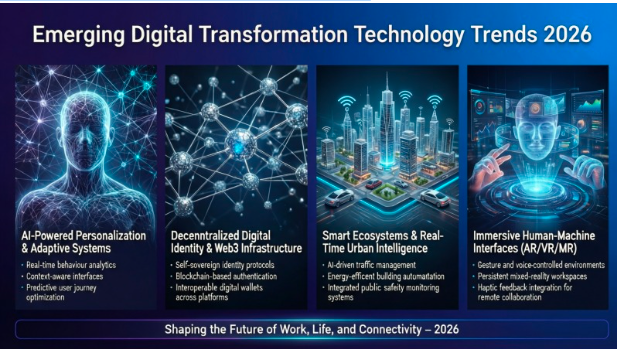
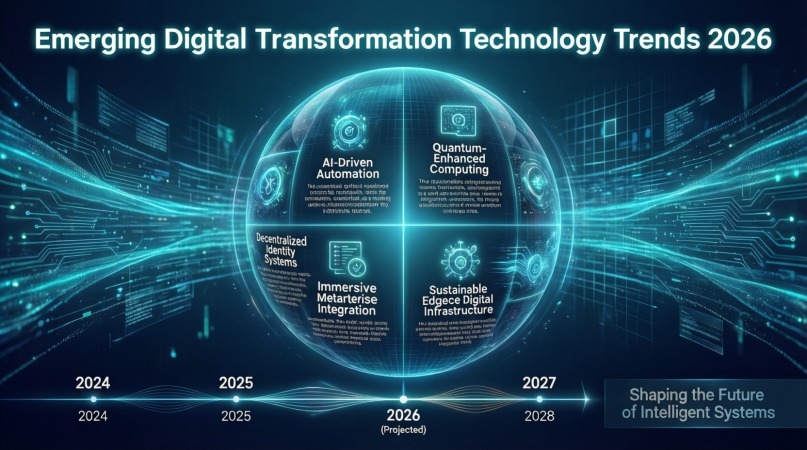
Top Emerging Digital Transformation Technology Trends in 2026
Artificial intelligence and machine learning continue to be central to digital transformation. By 2026, AI will be more sophisticated and widely integrated across operations, marketing, and customer service. AI-powered tools can automate tasks, analyze large volumes of data, and provide personalized solutions for customers. Machine learning algorithms improve over time, offering businesses predictive insights for sales, inventory, and market trends. Organizations adopting AI can reduce operational costs and make more informed decisions faster than their competitors.
Cloud computing is another key trend, providing organizations with scalable, flexible, and cost-effective solutions. Multi-cloud strategies, which use services from multiple providers, are expected to grow in 2026. Cloud computing allows businesses to host applications, store data securely, and facilitate collaboration across teams and locations. It also supports remote work and ensures business continuity during disruptions. Companies that leverage cloud computing can deploy solutions faster and adapt to changing business needs more efficiently.
Edge computing is becoming increasingly important as businesses require faster data processing. By bringing computation closer to the source of data, edge computing reduces latency and improves performance. This is particularly useful for real-time applications, such as autonomous vehicles, industrial monitoring, and healthcare systems. Edge computing allows organizations to process critical data locally while integrating with cloud platforms for analytics, creating a more responsive and efficient digital infrastructure.
Blockchain technology is evolving beyond cryptocurrencies and is expected to play a major role in secure, transparent, and tamper-proof transactions. By 2026, blockchain will be used in financial services, supply chain management, and digital identity verification. Organizations adopting blockchain can enhance trust with customers and partners while reducing the risk of fraud. Smart contracts further streamline business processes by automating agreements and reducing the need for intermediaries.
The Internet of Things connects devices to collect and share real-time data, enabling automation and actionable insights. IoT applications include smart cities, industrial monitoring, healthcare tracking, and retail analytics. By using IoT, organizations can improve efficiency, reduce costs, and respond faster to operational issues. The data collected by IoT devices also supports better decision-making and predictive maintenance.
Cybersecurity remains a critical component of digital transformation. As organizations rely more on digital technologies, they face increasing risks from cyber threats. In 2026, innovations in cybersecurity, including AI-driven threat detection and zero-trust frameworks, will become essential. Companies must continuously assess risks, update systems, and educate employees about security practices. Effective cybersecurity ensures that digital transformation initiatives are sustainable and safe.
Benefits of Digital Transformation
Digital transformation enables organizations to operate more efficiently, reduce costs, and deliver better services to customers. By automating repetitive tasks, businesses can focus on innovation and growth. Data-driven decision-making improves accuracy and strategy, while personalized digital experiences strengthen customer engagement. Digital transformation also accelerates time-to-market for products and services, allowing businesses to remain competitive in a fast-changing environment. Companies that embrace these technologies can innovate more freely and create new business models that were previously impossible.
Risks and Challenges
Despite its benefits, digital transformation comes with challenges. High initial costs and complex integration can make implementation difficult, especially for smaller businesses. Cybersecurity risks increase as more data and systems are digitized. Employee resistance and skills gaps can slow adoption, while regulatory and compliance issues may present additional hurdles. Organizations must carefully plan and manage these risks to ensure successful technology adoption.
Common Mistakes to Avoid
A common mistake is neglecting employee training, which can result in underutilized technology. Ignoring cybersecurity or assuming existing measures are sufficient can lead to costly breaches. Over-automation without considering human judgment can reduce flexibility and decision-making quality. Choosing technology that does not align with business goals or failing to monitor performance regularly can hinder transformation efforts. Organizations must adopt a thoughtful approach, balancing technology with people, processes, and strategy.
Expert Tips
Start small with digital transformation initiatives and scale gradually. Employee training is essential to ensure that new technologies are used effectively. Cybersecurity should always be a priority, with ongoing monitoring and updates. Businesses must focus on improving customer experience through technology rather than adding complexity. Monitoring results and analyzing performance metrics helps ensure ROI and guides continuous improvement. For innovation, exploring AR and VR can provide immersive experiences in marketing, training, or product demonstrations, giving businesses a competitive edge.
FAQs
1. What is digital transformation?
Digital transformation is the process of integrating digital technologies into all aspects of a business. It changes how organizations operate, deliver services, and interact with customers. The goal is to improve efficiency, decision-making, and customer satisfaction.
2. How is digital transformation different from digitalization?
Digitalization is the process of converting analog processes into digital formats, like using online forms instead of paper. Digital transformation is broader; it rethinks business strategies, models, and operations to leverage technology fully.
3. Which technology trends will dominate in 2026?
Artificial intelligence, cloud computing, edge computing, IoT, blockchain, and cybersecurity innovations are expected to be the most influential digital transformation trends in 2026.
4. How can small businesses adopt these trends?
Small businesses can start with affordable cloud-based solutions, AI-powered tools for marketing or customer support, and automation for routine tasks. Gradual adoption of IoT or blockchain can follow as the business scales.
5. What are the main risks of digital transformation?
Key risks include cybersecurity threats, high costs, employee resistance, data privacy challenges, and regulatory compliance issues. Planning, employee training, and continuous monitoring help mitigate these risks.
6. How does IoT benefit businesses?
IoT connects devices to collect real-time data, allowing businesses to monitor operations, predict maintenance needs, optimize supply chains, and improve decision-making, ultimately increasing efficiency and reducing costs.
7. Can digital transformation improve customer experience?
Yes, by providing faster services, personalized recommendations, interactive platforms, and smoother digital interactions, digital transformation enhances customer engagement, loyalty, and satisfaction.
8. How long does it take to implement digital transformation?
Implementation timelines vary depending on the organization’s size, resources, and the complexity of technologies being adopted. Simple initiatives may take a few months, while full-scale transformation can take one to three years.
9. What role does data play in digital transformation?
Data is the backbone of digital transformation. It helps organizations understand customer behavior, identify inefficiencies, make informed decisions, and personalize experiences. AI and analytics rely heavily on accurate and high-quality data.
10. Is digital transformation only for large enterprises?
No. While large enterprises often have more resources, digital transformation benefits businesses of all sizes. Small and medium businesses can leverage affordable cloud tools, AI applications, and automation to stay competitive and grow efficiently.
Conclusion
Emerging digital transformation technologies in 2026 will continue to reshape industries, streamline operations, and improve customer experiences. AI, cloud computing, edge computing, IoT, blockchain, and cybersecurity innovations are central to this transformation. Organizations that adopt these trends thoughtfully will gain a competitive advantage, reduce operational inefficiencies, and create new business opportunities.
While challenges such as cost, integration, and cybersecurity exist, proper planning, training, and monitoring can overcome these obstacles. Digital transformation is not just a trend; it is essential for survival and growth in an increasingly digital world. By understanding and leveraging emerging technologies, businesses can innovate, optimize operations, and provide greater value to customers. In 2026, embracing digital transformation will define which organizations thrive in the digital age.
