

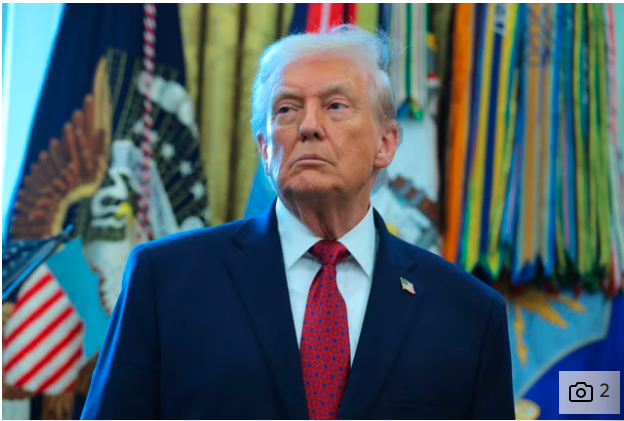
In a highly controversial interview with The New York Times, U.S. President Donald J. Trump declared that he does not need to follow international law, claiming that the only thing that can restrain his power is his own morality and judgment.
According to reporting by The Independent, Trump stated bluntly: “I don’t need international law. I’m not looking to hurt people.” He argued that international law is flexible, stating that whether the U.S. must follow it “depends on what your definition of international law is.”
Military Action Without Limits?
Over the past week, Trump’s administration has taken sweeping military and diplomatic actions that have shocked global leaders. This includes air strikes on Venezuela and the controversial capture of President Nicolás Maduro — moves widely criticized as violations of international norms.
Trump also escalated rhetoric about acquiring Greenland, a semi-autonomous Danish territory, arguing that owning the island — rather than leasing or negotiating over it — provides the U.S. with strategic dominance. The Independent’s coverage shows that Trump believes absolute control over Greenland is necessary for national security.
In addition to Greenland and Venezuela, Trump’s rhetoric has alarmed leaders in Colombia, Mexico, and Europe, where critics warn that ignoring international law risks destabilizing alliances and emboldening rival powers.
Trump’s Own Morality as the “Limit”
When asked if there were any legal or constitutional checks on his power, Trump replied:
“Yeah, there is one thing. My own morality. My own mind. It’s the only thing that can stop me.”
This admission underscores a deeply personal approach to foreign policy — one in which Trump views traditional checks like international law and multilateral agreements as optional.
Global Reaction
World leaders and legal experts have expressed alarm. Many argue that decisions like seizing Venezuela’s president and openly discussing annexing allied territory could erode the rules-based international order and provoke unprecedented diplomatic crises.
In Europe, criticism has been particularly strong, with political leaders warning that such actions could weaken NATO and strain relations with key allies.
